Answers for Maximizing Customer Satisfaction: The Synergy of CRM and Contact Center
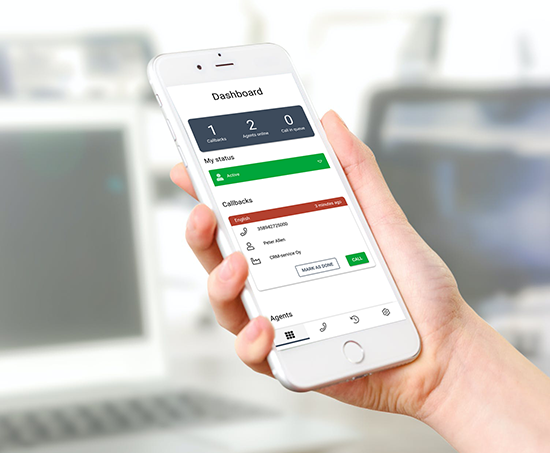
In today’s fast-paced business landscape, the ability to provide top-notch customer service is paramount. Companies are continuously searching for ways to enhance their customer interactions and streamline their operations. Two key components that play a crucial role in this endeavor are Customer Relationship Management (CRM) systems and Contact Centers (CC). In this article we explain how CRM and Contact Center synergy can benefit your organization.
What is the difference between a CRM and a Contact Center?
CRM (Customer Relationship Management): A CRM system is a software solution that helps businesses manage their customer relationships by collecting, organizing, and analysing customer data. It provides a holistic view of each customer’s interactions with the company across various touchpoints, including sales, marketing, and customer service. The primary focus of CRM is on data management, analysis, and improving customer relationships over the long term.
Contact Center: A Contact Center, often referred to as a Call Center, is a centralized department or system within a company that handles customer interactions, primarily through phone calls but also via other channels such as email, text message and self-service portals. Its main goal is to address customer inquiries, resolve issues, and provide support efficiently and effectively, often in real-time.
In summary, a CRM system is cantered around managing and analysing customer data, while a Contact Center focuses on real-time customer interactions and support. In best case scenario Contact Center provides the data to analyze and use in a CRM.
What are the benefits of Contact Center in a CRM?
A CRM system within a Contact Center can provide numerous advantages for businesses:
- Enhanced Customer Insights: By merging customer data from the CRM with real-time interactions in the Contact Center, agents gain a more comprehensive understanding of each customer. This leads to personalized and context-aware interactions, allowing agents to anticipate customer needs and preferences.
- Improved Efficiency: The CRM streamlines workflows by providing agents with access to comprehensive customer information, enabling them to resolve issues more quickly and with fewer transfers. This results in shorter call durations, reduced handling times, and improved first-call resolution rates.
- Cross-Channel Consistency: A CRM-integrated Contact Center allows for consistent customer experiences across various communication channels. Customers can initiate contact through email, portal, or phone, and agents will have access to their history and information, ensuring a seamless transition between channels.
How to increase your customer service with CRM and Contact Center
To maximize the potential of CRM and Contact Center integration for superior customer service, follow these key strategies:
- Unified Data: Ensure that CRM and Contact Center systems are one system, allowing agents to access customer data in real-time. This unification enables agents to respond to inquiries with a deep understanding of the customer’s history and needs.
- Customer Feedback: Collect and analyze customer feedback to continually improve your services. Use data to identify trends, issues, and areas for enhancement.
- Process Automation: Implement workflow automation within your CRM system to streamline routine tasks and allow agents to focus on more complex customer interactions.
- Analytics and Reporting: Utilize CRM analytics to measure the effectiveness of your customer service initiatives and make data-driven improvements.
- Training: Train users agents to utilize CRM tools effectively. They should understand how to leverage customer data for more personalized interactions and issue resolution.
In conclusion, combining CRM and Contact Center solutions can significantly improve customer service by providing a holistic view of customer interactions, enhancing efficiency, and fostering cross-channel consistency. This integration empowers businesses to deliver superior service and build lasting customer relationships, ultimately leading to increased customer satisfaction and loyalty.